There are long standing issues with recruiting and retaining Indigenous students in post-secondary programs – and that’s why Duncan McCue is trying something different at Carleton University.
The award-winning journalist and author of Decolonizing Journalism is behind a new Indigenous-led program, the Certificate in Journalism in Indigenous Communities (CJIIC).
McCue said, “Colonization didn’t end long ago – it’s still in our newsrooms. Programs like this are how we start changing that.”
Thanks to a financial partnership with the Mastercard Foundation’s EleV Program, the hybrid-learning program allows Indigenous students to study journalism without leaving their home communities – a model McCue hopes will transform how journalism schools approach reconciliation and representation.
He has long noticed how low Indigenous enrolment is in journalism schools across Canada, even though interests exist for such programs within communities, and how rarely Indigenous students encounter other Indigenous students in the classroom.
Having a hybrid learning program, where students don’t have to leave their support systems, is just part of decolonizing journalism and building an Indigenous worldview into the learning. Who you hire to teach is another factor.
McCue said, “I can’t think of another journalism program in the country that has a line up of all Indigenous instructors.”
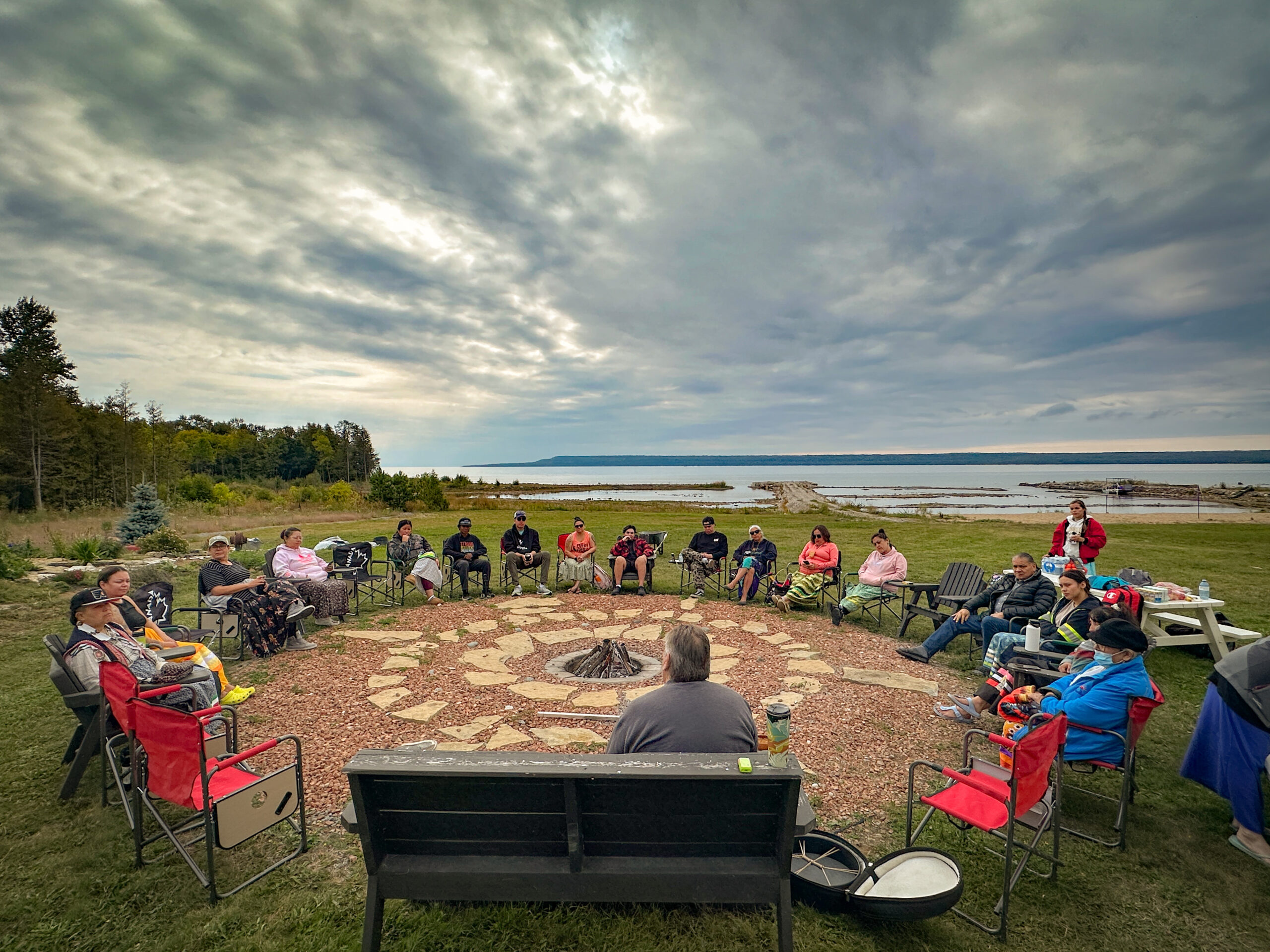
The CJIIC program lasts nine months and is worth 4.5 credits. From September to May, it is a mixture of online and in-person classes. Online classes are twice a week for six weeks, but there are also intensive seven to eight day workshops in-person at a variety of locations. Transportation to and from the intensives, as well as accommodations and food are paid for.
After completing their coursework, students receive support in finding a two-week internship. While on placement, food, accommodations and transportation to and from the internship are provided.
Trevor Green, a journalism instructor at Toronto Metropolitan University and Carleton, is teaching in the CJIIC program. His course features many guest speakers, such as the Editor of the Toronto Star, Nicole MacIntyre, and Indigenous writers and journalists, Jordan Abel, Tanya Talaga, Trina Roache, and Pulitzer Prize-winning journalist and TMU professor Connie Walker.
Green noted that the program is unlike any other. “I wish that there would’ve been something like this for me when I decided to study journalism,” said Green.
McCue started developing the program three years ago. The overall goal is to increase the number of Indigenous students in the classroom and in the newsroom. It officially launched in August 2025. He described the immediate interest in the program as “huge.” Over 100 people reached out for more information. There are currently 20 enrolled in the first cohort.
In his course in the CJIIC program, Green emphasizes both the terms resurgence and reconciliation, as well as building trust, community, and cultural safety in journalism education. He described the traditional journalism curriculum as “fine butter no parsnips” where “fine words” are shared but no “concrete steps” are taken. He said this new program will “actually start to address decolonizing newsrooms.”
As an example of doing things differently and widening impact to other journalism programs, Green suggested a collaboration between the students in his CJIIC class and journalism students at TMU. As a result, two TMU students from the 3rd year TV workshop class attended one of Green’s classes. The TMU students went with a goal to widen perspective on the best questions to ask Green in an interview about Orange Shirt Day and the issues Indigenous students face in university.
The questions developed by the TMU and CJIIC students were used in an in-studio interview at TMU. And Green, in turn, was able to share the entire video and some behind the scenes footage of the interview process with his class.
Kayla Solway, one of the TMU students who participated, shared some of what she learned through the experience, including that non-Indigenous people, particularly journalists, are a long way from truly understanding the impact of residential schools.
“The (CJIIC) students were saying how sometimes it feels like for them they are always the ones teaching and putting in the work for others to understand.” Solway said they emphasized that “both parties can come to the table with some research. But, it’s also okay to ask questions you don’t know the answer to.”
Any students who graduate from the CJIIC program, along with their certificates, will receive a $3,000 award towards continuing their education journey.
“What we have done here is not rocket science, There is a want and a need, just not enough universities do anything about it,” said McCue.
